
Disaster Virtual Care

Disaster MRC Telehealth Strike Team Model 1.0

The Southeastern Telehealth Resource Center (SETRC) and the Southern Regional Disaster Response System (SRDRS) for HHS Region 4 are pleased to jointly announce the release of the Disaster MRC Telehealth Strike Team Model 1.0, an operational model that provides Medical Reserve Corps (MRC) units guidance to integrating and using deployable telehealth capabilities to help mitigate medical surge, preserve hospital resources, and strengthen community regional disaster response.

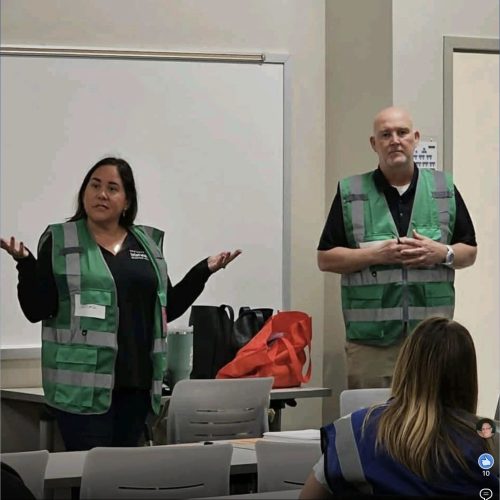
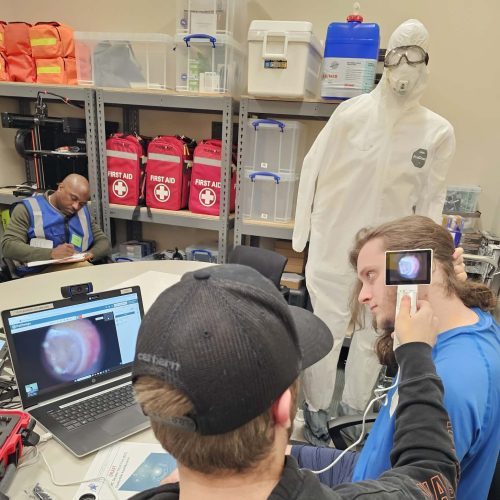
Model 1.0 enables MRC volunteers to deploy as the telehealth facilitators with portable telehealth assets directly into disaster-affected communities, connecting patients with remote physicians in real time. By meeting patients where they are, the model extends clinical reach, supports low acuity patients where they are in the community helping to preserve hospital, emergency department, and EMS capacity in disaster incidents. MRC units and communities that adopt the model can increase local, state, and regional surge capacity, provide timely access to care during disaster disruptions, and support continuity of care while reducing avoidable emergency department utilization.

Included below are the completed Disaster MRC Telehealth Strike Team Model resources, representing the culmination of a first-of-its-kind collaboration between the Southeastern Telehealth Resource Center (SETRC) and the Southern Regional Disaster Response System (SRDRS) for HHS Region 4. Together, we have developed an innovative, scalable framework that demonstrates how telehealth can be operationalized to strengthen disaster response, expand access to care, and enhance community resilience. While designed to support Medical Reserve Corps units, these resources are intended to serve as a national model that organizations can adapt to meet their unique operational needs and local response capabilities. We are proud to share this work and hope it inspires broader adoption of telehealth as a critical component of disaster preparedness and response. If you have questions about the model, are interested in implementing it within your organization, or would like technical assistance with adoption, we encourage you to contact us at info@setrc.us. We look forward to partnering with organizations across the country to advance innovative, sustainable disaster telehealth solutions that improve readiness and strengthen communities before, during, and after emergencies.

Concept of Operations (CONOPS)

The foundational document for the model. It establishes the mission, objectives, governance, deployment triggers, phases of operation, roles and responsibilities, and capability requirements for integrating a Disaster MRC Telehealth Strike Team at the local or state level.  It also includes a four-page list of funding pathways for MRC units who want to explore adoption of this model.

store documents icon

Deployable Asset Blueprint

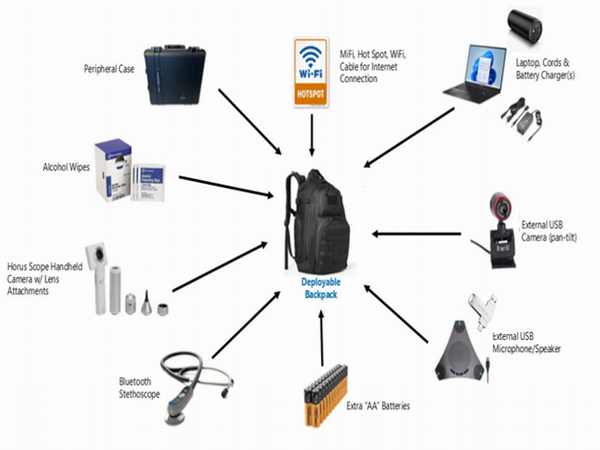
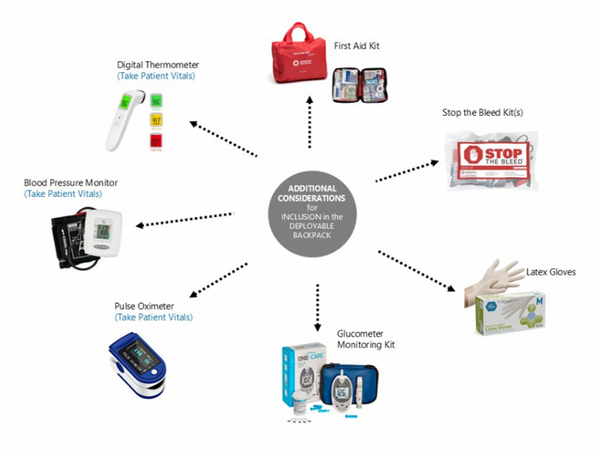
A practical, portable reference guide designed to travel with the deployable telehealth asset itself. The Blueprint details backpack contents, equipment user guidance, pre deployment planning considerations, and step by step guidance for providers and MRC presenters during active deployment.


networking icon

Functional Annex

A ready to use planning annex that helps MRC units and their partners integrate the Disaster Telehealth Strike Team capability into existing emergency operations plans, with activation guidance, workflows, and coordination points.
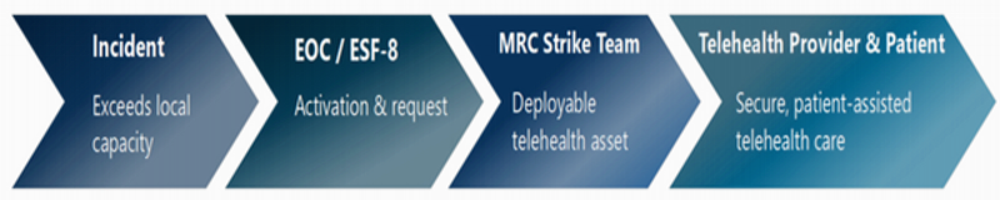
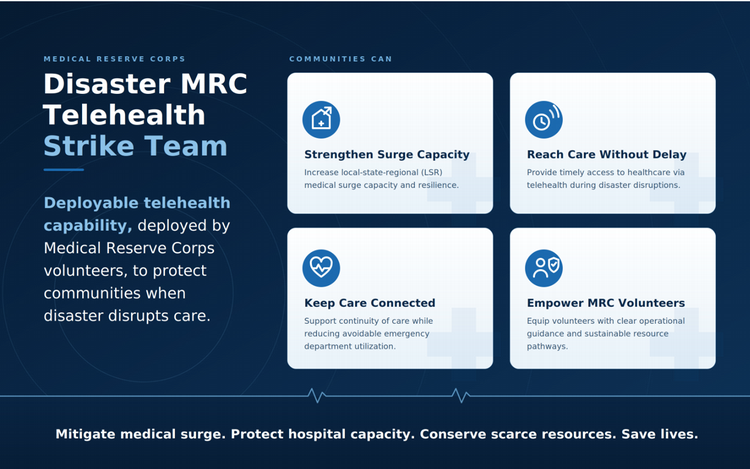
The MRC Model

The model supports general population response while allowing adaptation for specialized populations, including pediatric and access and functional needs populations, as resources allow. Future enhancements, including integration of clinical care support capabilities, will be addressed in Disaster MRC Telehealth Strike Team Model 2.0.

Screenshot
Screenshot
Disaster Relief 3

Acknowledgments: 

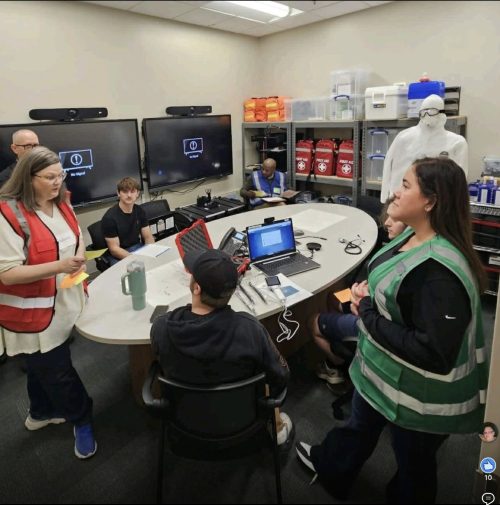
The development and validation of this model would not have been possible without the valuable contributions of our regional partners. We extend our sincere appreciation to all participating organizations and individuals who provided critical insights into model development, supported the exercise that was conducted in March 2026, and helped evaluate operational effectiveness.  Their collaboration and commitment to advancing disaster readiness directly informed the refinement of this model. 

We gratefully acknowledge the following partners for their participation and contributions:

APP MRC, Appalachian State University

AppHealthCare

Center of Operational Medicine, Medical College of Georgia at Augusta University

Global Partnership for Telehealth

High Country Council of Governments

Medical Reserve Corp – East Metro Health District (MRC-GEM)

North Carolina Community Health Center Association

Public Health AmeriCorps, Appalachian State University

Student Health Service, Appalachian State University Student Health Service, Appalachian State University

SETRC & SRDRS Notice: 

The Southeastern Telehealth Resource Center is supported by award number U1UTH42521 from the Office for the Advancement of Telehealth, Federal Office of Rural Health Policy, Health Resources Services Administration, Department of Health and Human Services.


The Southern Regional Disaster Response System (SRDRS) for HHS Region 4 was made possible by Award Number HITEP 210054-01-00 from the Administration for Strategic Preparedness and Response (ASPR). Its contents are solely the responsibility of the authors and do not necessarily represent the official views of ASPR or HHS.


Hi there!

Got a question or need a hand? We’re happy to help.

Would you like a member of our team to reach out and get you what you need?